AI Voice Agents in Healthcare: How Practices Are Eliminating Missed Calls
The average medical practice misses 20-30% of inbound calls. AI voice agents answer every one — here's how they work and what to look for.
The Hidden Cost of Missed Calls
Here's a number that should concern every practice owner: the average medical office misses 20-30% of inbound calls. During peak hours — Monday mornings, lunch breaks, and end-of-day rushes — that number can spike to 40-50%.
Each missed call represents a patient who may never call back. Studies show that 85% of callers who don't reach a live person won't leave a voicemail. They'll call the next practice on the list instead. At an average patient lifetime value of $3,000-$10,000, those missed calls add up to six figures in lost revenue annually for most practices.
What AI Voice Agents Actually Do
An AI voice agent isn't a robotic phone tree or a glorified voicemail system. Modern healthcare AI voice agents are conversational — they understand natural language, respond in real-time, and handle complex interactions that previously required a trained receptionist.
Here's what a typical AI-handled call looks like:
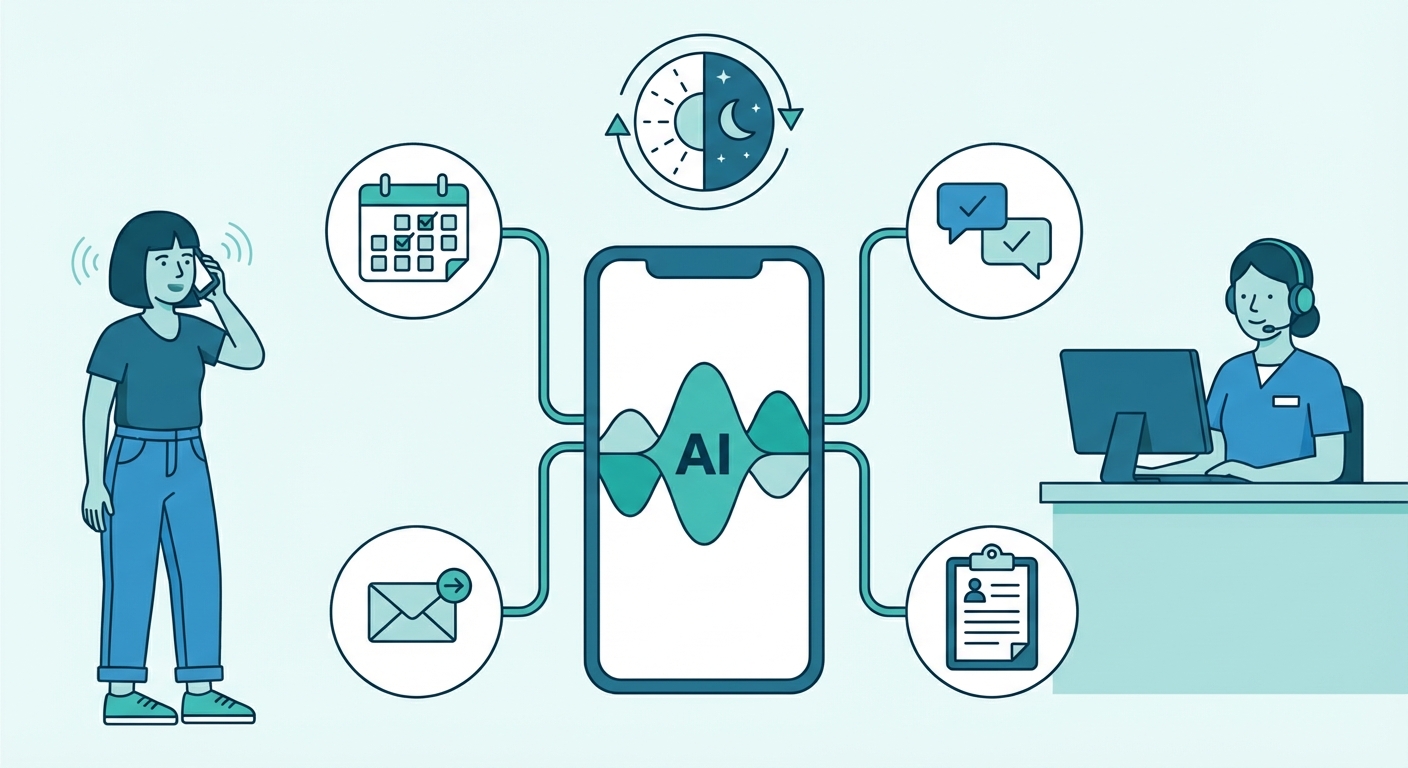
- Greeting & identification: The AI answers with your practice name and a natural greeting. It identifies whether the caller is an existing patient or new.
- Intent recognition: It determines why the caller is calling — scheduling, billing question, prescription refill, directions, or urgent care need.
- Appointment scheduling: For scheduling requests, it checks real-time availability, offers options, books the appointment, and sends confirmation via text.
- Information handling: For common questions (hours, location, insurance accepted, new patient process), it provides accurate answers instantly.
- Escalation: For clinical questions or complex situations, it transfers to the appropriate staff member or takes a detailed message with callback priority.
The Technology Behind It
Three breakthroughs made healthcare AI voice agents practical in 2025-2026:
1. Low-latency speech-to-speech models. Early AI phone systems had noticeable delays between the caller speaking and the AI responding. Current systems respond in under 500 milliseconds — faster than most humans think before answering.
2. Medical knowledge grounding. The AI is trained on your specific practice information — providers, services, hours, insurance panels, and protocols. It doesn't guess or make things up. If it doesn't know something, it says so and offers to take a message.
3. EHR and calendar integration. The AI connects directly to your scheduling system. It sees real-time availability, respects provider preferences and blocked times, and books appointments that actually work for your schedule.
Real Results from Real Practices
The impact is measurable within the first month:
- Round-the-clock coverage. Calls are answered on the first ring, 24/7/365, instead of going to hold music or voicemail.
- 30-40% reduction in front desk phone time. Staff can focus on in-office patients instead of being tethered to the phone.
- 15-25% increase in new patient bookings. Calls that previously went to voicemail now convert to appointments.
- After-hours capture. 20-30% of calls come outside business hours. AI captures every one.
What to Look For in a Healthcare AI Voice Agent
Not all AI voice solutions are created equal. Here's what matters for healthcare specifically:
- HIPAA compliance. This is non-negotiable. The vendor must sign a BAA, encrypt all call data, and have SOC 2 compliant infrastructure.
- Natural conversation flow. Test it yourself. Does it sound robotic? Can it handle interruptions, corrections, and multi-part questions?
- Your scheduling system integration. If it can't book appointments directly in your PMS/EHR, it's just a fancy answering machine.
- Customizable protocols. Every practice handles calls differently. Can you define how urgent calls are routed? Can you set provider-specific scheduling rules?
- SMS follow-up. The best systems send text confirmations, reminders, and follow-ups automatically after calls.
- Transparent pricing. Beware of per-minute pricing that spirals with volume. Look for predictable monthly plans.
The Staffing Reality
Let's talk about the elephant in the room: staffing. Hiring, training, and retaining front desk staff is harder and more expensive than ever. The average medical receptionist salary is $35,000-$45,000 plus benefits, and turnover in healthcare administrative roles exceeds 30% annually.
AI voice agents don't replace your team — they augment it. Your receptionist handles complex in-person interactions, insurance verifications, and situations that require human judgment. The AI handles the volume — the routine calls that eat up 60-70% of phone time.
Getting Started
Most practices can have an AI voice agent live within 48 hours. The setup process is straightforward: provide your practice information, connect your scheduling system, define your call handling preferences, and start routing calls. Many solutions offer a trial period so you can test with real calls before fully committing.
The question isn't whether AI will handle healthcare phone calls — it's whether your practice will adopt it before your competitors do.