Organic SEO vs. Paid Ads: Why Healthcare Practices Should Invest in Both
Paid ads get you instant traffic, but organic SEO builds a patient pipeline that compounds over time. Here's how to balance both for maximum ROI.
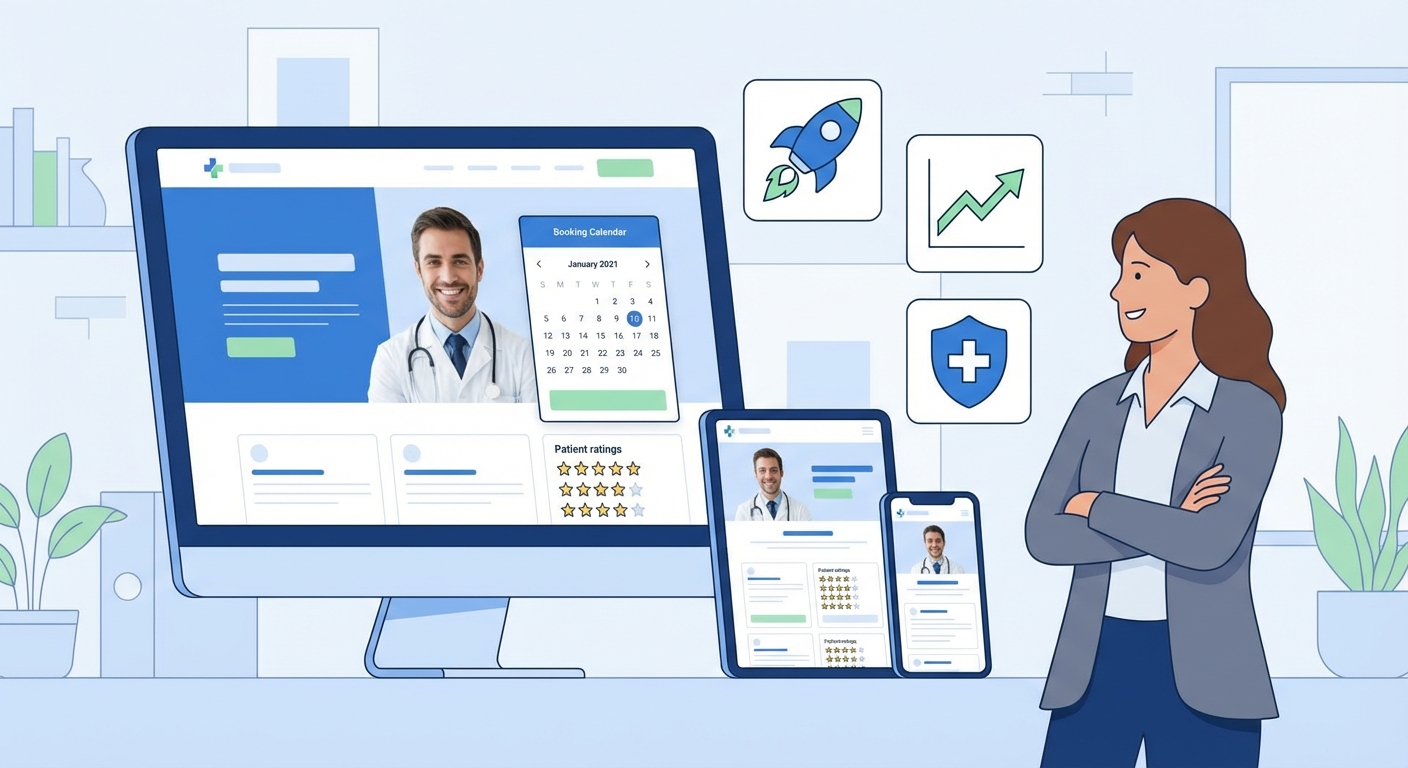
The Great Debate: SEO vs. Paid Ads
If you run a healthcare practice, you've probably asked this question: "Should I spend money on Google Ads or invest in SEO?" The answer? Both. But understanding when and how to use each channel is what separates practices that grow from those that plateau.
Let's break down the real numbers. A typical Google Ads click for "chiropractor near me" costs $8-15. For "dentist near me," you're looking at $6-12 per click. And here's the kicker — only about 3-5% of those clicks turn into booked appointments. That means each new patient from paid ads costs you $200-500 in ad spend alone.
Why Organic SEO Is the Long Game Worth Playing
Organic search results get 70-80% of all clicks on Google. When your practice ranks on page one for "best chiropractor in [city]," you're getting free, high-intent traffic every single day. Unlike paid ads, that traffic doesn't stop the moment you pause your budget.
Here's what makes medical SEO different from general SEO:
- Local intent is everything. 76% of people who search for a healthcare provider on their phone visit within 24 hours.
- Google Business Profile is your storefront. Optimizing your GBP with photos, reviews, and accurate info drives more calls than your website.
- Medical content requires E-E-A-T. Google holds health content to a higher standard. Your site needs to demonstrate Experience, Expertise, Authoritativeness, and Trustworthiness.
- Reviews are ranking signals. Practices with 50+ Google reviews consistently outrank those with fewer, regardless of other factors.
When Paid Ads Make Sense
Don't dismiss paid advertising entirely. There are specific situations where Google Ads deliver faster ROI than SEO:
- New practice launch. When you have zero organic presence, ads get you in front of patients immediately while SEO builds in the background.
- Seasonal services. Promoting flu shots in October or back-to-school physicals in August? Ads let you ramp up and down quickly.
- High-value procedures. If you offer cosmetic dentistry at $5,000+ per case, even a $500 ad spend per patient acquisition is a great ROI.
- Competitive markets. In saturated metro areas, ads ensure visibility while your organic rankings build over 6-12 months.
The Winning Formula: A Combined Strategy
The practices seeing the best results in 2026 are running both channels simultaneously. Here's a practical framework:
Month 1-3: Launch Google Ads targeting your top 5 services. Simultaneously, optimize your Google Business Profile and start publishing weekly blog content targeting long-tail keywords like "does insurance cover chiropractic adjustments in [city]."
Month 4-6: Your organic rankings start climbing. Begin shifting 20-30% of ad budget into content marketing and link building. Track which ad keywords convert best — these become your SEO priority keywords.
Month 7-12: Organic traffic should be generating 30-50% of new patient inquiries. Reduce ad spend on keywords where you now rank organically. Redirect that budget to new service lines or geographic expansion.
Measuring What Matters
Most practices track the wrong metrics. Page views and impressions don't pay the bills. Focus on:
- Cost per lead (CPL): Total marketing spend divided by new patient inquiries.
- Cost per acquisition (CPA): Total spend divided by patients who actually booked and showed up.
- Patient lifetime value (LTV): A patient who stays 3 years is worth far more than the initial visit. Factor this into ROI calculations.
- Phone call tracking: 60%+ of healthcare leads come via phone, not web forms. Use call tracking to attribute calls to the right channel.
The Bottom Line
Paid ads are your accelerator. Organic SEO is your engine. You need both to build a practice that grows sustainably. Start with ads for immediate results, invest in SEO for compounding returns, and let the data guide your budget allocation over time.
At AI Scan Solutions, every MedSiteAI website comes with built-in SEO optimization — from schema markup to local SEO pages — so your organic presence starts building from day one.